Leading by Example: The Horden Together Partnership and Neighbourhood Health

The Horden Together Partnership has attracted a lot of attention recently: from Professor Chris Whitty’s visit to County Durham, to Gemma Rowe and Ali Turner’s well-received session at the recent Insights North East conference, and the independent publication of the NIHR PHIRST Elevate evaluation.
So why is Horden generating so much interest? Because it has become a flagship example of how communities can tackle multiple disadvantage through local partnerships. With an increasing national focus on Neighbourhood Health, it simply cannot be overlooked.
The NHS Neighbourhood Health Plan recognises that healthcare cannot be delivered through hospitals and specialised services alone. Instead, it calls for a community effort focusing on preventive care and locally coordinated support for people to gain access to necessary services, rather than specialised upward referrals. While the Neighbourhood Health Plan is still moving from policy into practice, the Horden Together Partnership leads by example. By already putting these principles into use for several years, they offer valuable insights into local leadership, partnership working, and community trust.
Horden, located in Durham County, is a former mining village shaped by decades of economic and social decline, crime and health inequalities. To address this, the Horden Together Partnership was born in 2021.
While Horden may be on a smaller scale, it has much bigger implications for national adoption– as evidenced by Prof Chris Whitty’s recent visit.
Combined with the data and recommendations gathered from the NIHR PHIRST Elevate evaluation, this visit brings attention to the importance of community relationships and tailored support to address health inequalities and multiple disadvantage.
Born out of a need to improve access to essential services and support for its residents, many of whom face polycrisis, the Horden Together Partnership (HTP) developed a place-based intervention.
At its heart, Horden Together makes it easier for residents to access support within their own community without having to navigate dozens of fragmented services. The partnership brings together a whopping 67 organisations spanning housing, employment, health, addiction, crime and financial support to people who need it most.
One of Horden Together’s greatest assets is the lived experiences of its community navigators who have a deep understanding of clients’ experiences and challenges. An emphasis is placed on personalised, non-time limited support. Instead of asking “What service do you need?”, navigators ask what matters most to their clients and work to develop a plan that adapts as circumstances change. This is where the partnership gets put into action: navigators connect their clients to the right services including debt management, housing support, addiction services, or local community groups.
One resident described their experience with Horden Together:
“You are a warrior, like a dog with a bone when it comes to protecting and supporting the people you work with. You fought battles I felt too overwhelmed to face, and through your support, you taught me how to fight my own. Because of you, I have found my confidence and feel so much better for it.”
Beyond individual case studies, Horden Together also delivers a quantifiable social return on investment for the council and other public bodies. For every £1 invested in Horden Together, the social return of investment is between £8.29 and £27.19 per year!
The recent Insights North East conference focused on one central question: how do we move from listening to communities to genuinely embedding citizen voices into policy? Gemma Rowe and Ali Turner, both locals who have lived in Horden all their life, answered: by building services with communities, rather than just delivering services to them.
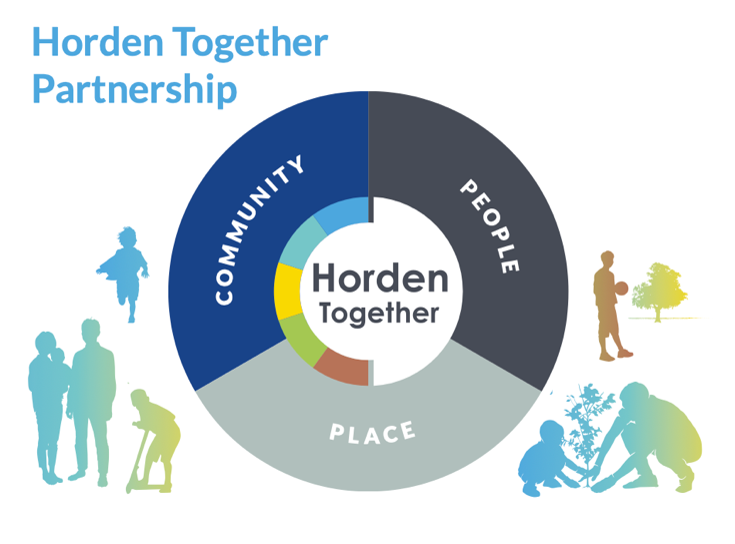
HTP is built around three main pillars: people, place, and community. Lived experience community navigators offer one-to-one, non-time-limited support to their clients. Residents’ safety, well-being and local pride are rooted in the physical, environmental, and structural conditions of their community. Finally, strong working relationships with local organisations coordinate sustainable access to essential services. These pillars do not operate independently. They function as interdependent structures to establish a strong place-based, system-wide innovation.
The Horden Together panel illustrated that trusted relationships and cross-sector partnerships are uniquely primed to deliver essential services when residents and their community are involved in the decision-making process.
This message also came across strongly through the PHIRST Elevate evaluation. Horden Together’s success is not just the result of partnership working; it’s built on the foundation of trust, relationships, and local leadership. The lived experiences of community navigators are essential, building credibility and connecting with people who are experiencing the very same challenges they previously went through. Having non-time-limited support gives these relationships time to develop, allowing support systems to adapt and evolve.
Horden Together also recognises that improving health is about more than healthcare. Safer neighbourhoods, stronger local partnerships, and pride in the community all contribute to a healthier place to live. As evidenced by the NIHR PHIRST Elevate evaluation, over 60% of Horden Together’s referrals are to community, voluntary, or universal services, ensuring that specialist care remains available for those who need it while also strengthening support closer to home.
Every community faces different challenges, has different strengths, and requires different solutions. This is why the recent NIHR Evaluation Report highlights what elements of Horden Together may be transferable to other similar community interventions, and which elements might need to be adapted to local context.
As Neighbourhood Health continues to develop nationally, Horden Together reminds us that some of the most valuable innovations are already happening.
Read about the recent evaluation here
Watch the Horden Together video
Emma has previously completed an MSc at Edinburgh University and is currently a Physician Associate/Master of Public Health graduate student at Tufts University in Boston, USA.